Let us know what you think on the LinkedIn version of this newsletter!
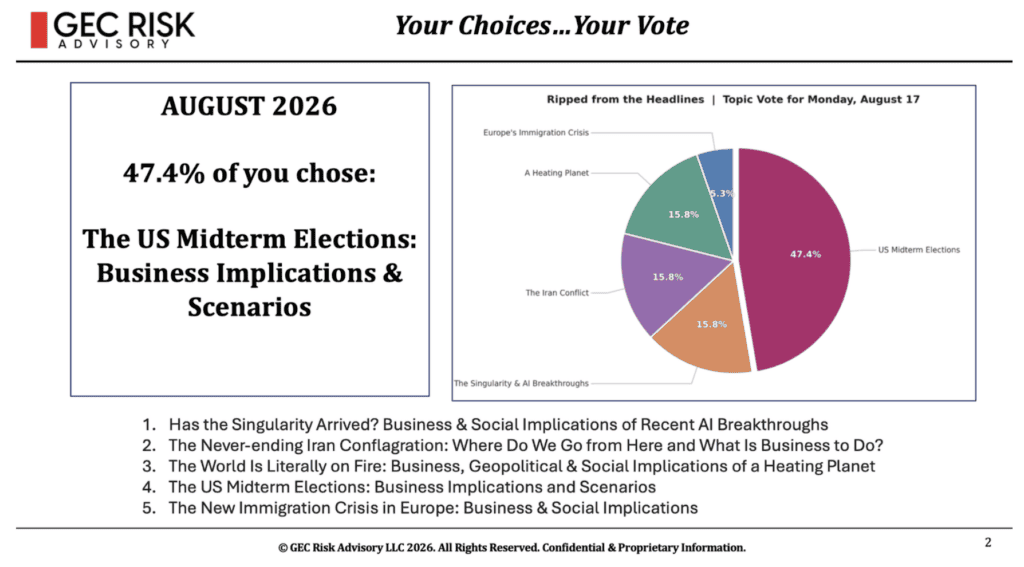
As per our practice for the monthly Athena Alliance / GEC Risk Advisory LLC “Ripped from the Headlines” Salons, I selected five stories (literally Ripped from the Headlines) a week before our August Salon, and almost half of the Athena members voting chose one story by far – “The US Midterm Elections: Business implications and Scenarios” – over the other 4 stories listed (see graphic below).
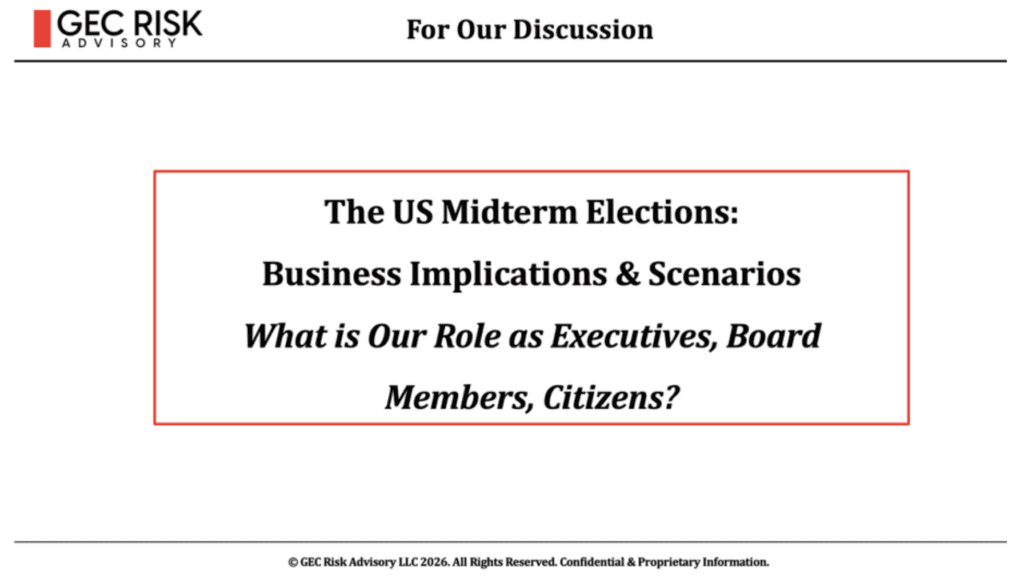
After I presented my analysis using reputable, reliable sources (Financial Times Gallup Focaldata YouGov The Economist Freedom House & Tech Policy Press), the question the group considered for our off the record, Chatham House Rules-based conversation was the following:
The Salon focused on the upcoming U.S. midterm elections, analyzing recent polls, voter sentiment, and the intersection of technology and democracy.
The group also discussed the lack of leadership in both government and business, the rise of anti-establishment candidates, and the overall need for empathetic, responsible leaders. The conversation highlighted fears about the future of democracy in the U.S., with scenarios ranging from Democratic control of Congress to continued Republican dominance and emphasized the importance of civic engagement and voting.
To tee up our conversation, below are two slides I presented to the group with my analysis of factors that are important between now and the November elections and possible scenarios and their outcomes.
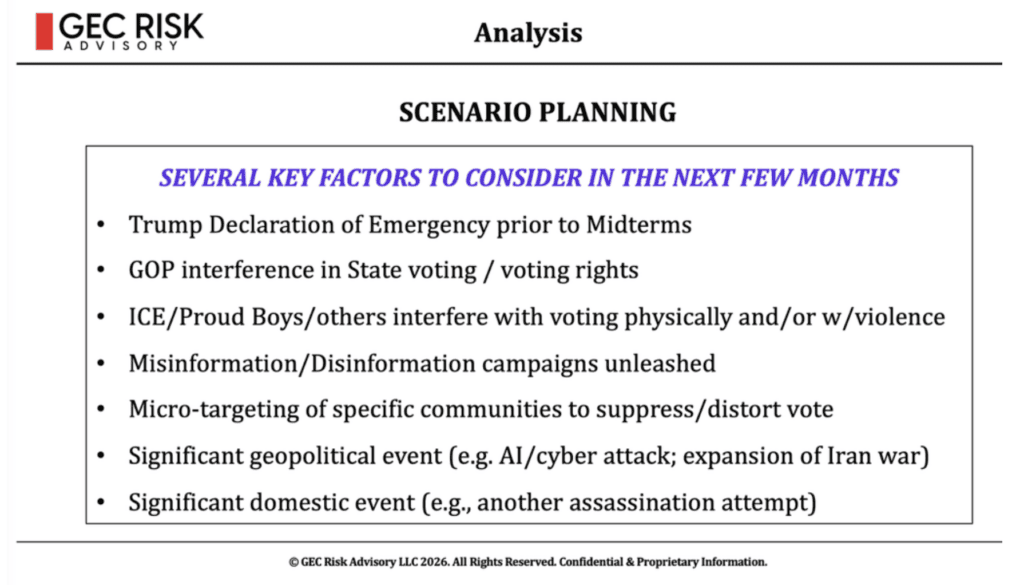
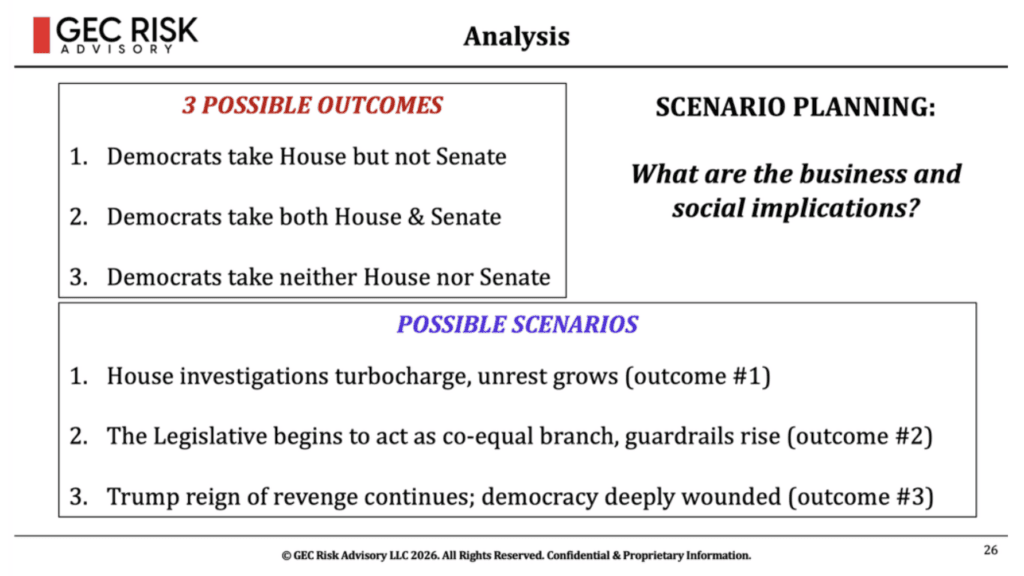
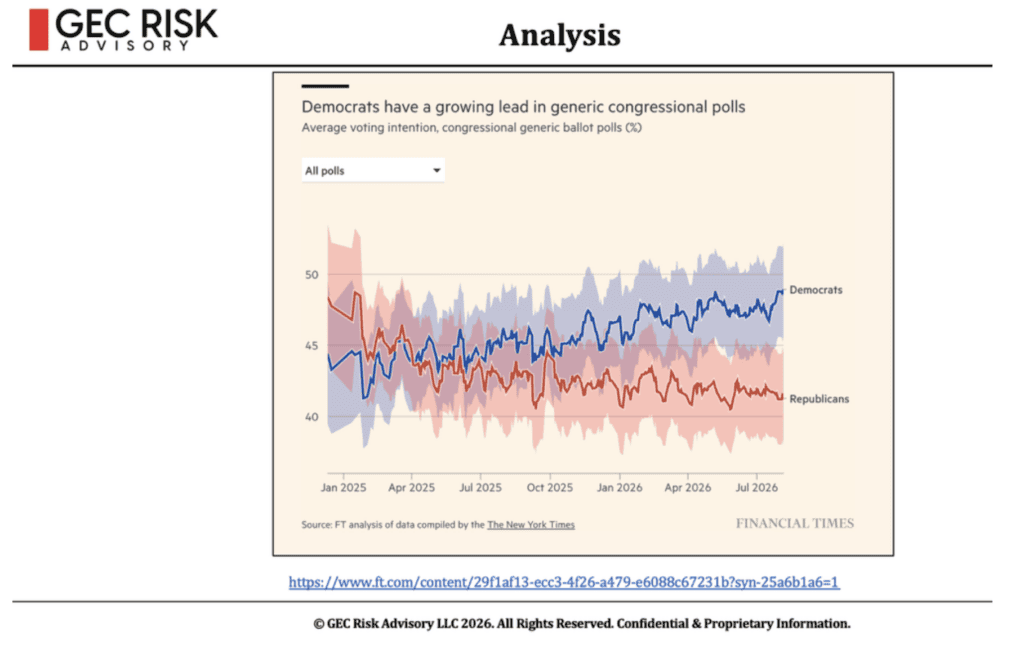
I presented an analysis of the upcoming U.S. midterm elections from several different sources, highlighting key polling data showing in one generic poll (included below) Democrats leading by 6 points with 3 months to go, though only 25% of Americans express high confidence in the fairness of November elections.
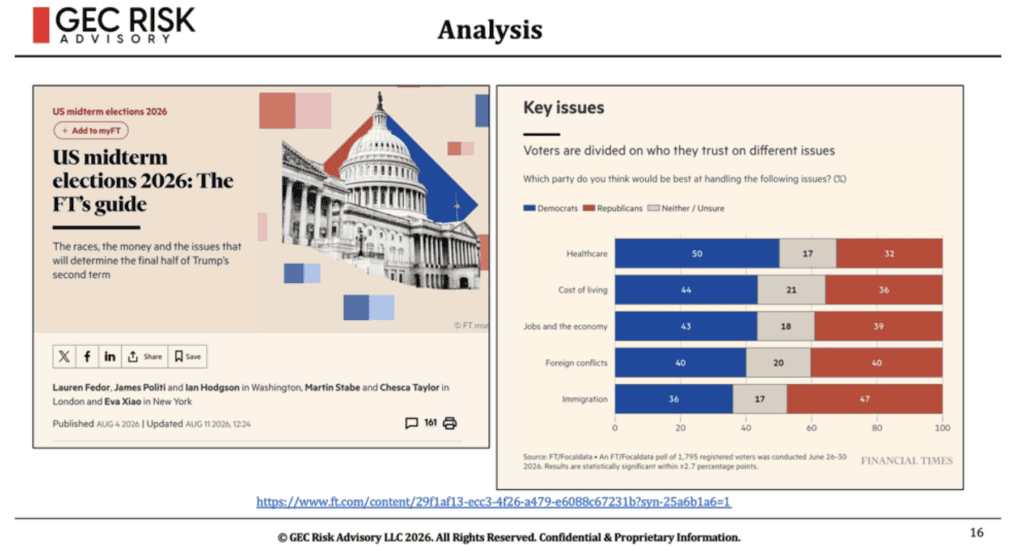
I discussed how polling data referenced during the discussion showed a majority of voters reporting financial strain since the last inauguration, a factor discussed as one of several drivers of current voter sentiment. See graphic below summarizing the election’s key issues from the Financial Times US Midterm Election 2026 Guide.
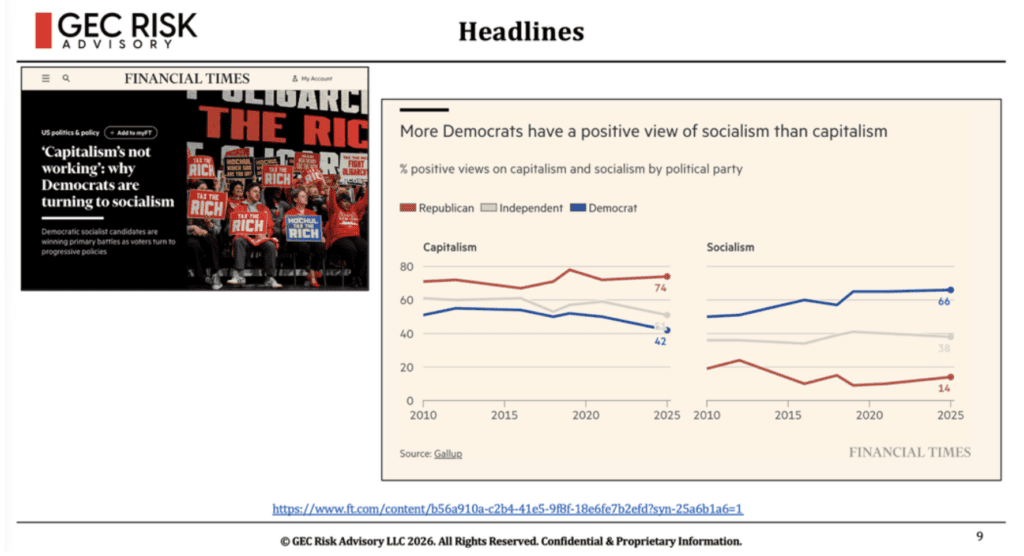
The presentation also covered the growing support for democratic socialism among Democrats and the increasing role of technology, including AI and data centers, in shaping political discourse and potentially affecting election outcomes. See graphic below.
One participant expressed concerns about relying too heavily on polls in elections and questioned their accuracy, citing examples like the Wisconsin Democratic primary where polls predicted a different outcome than the actual results. Another participant acknowledged this point about polls being misleading and suggested that people should focus on choosing representatives based on their values rather than poll numbers. Both participants agreed on the importance of encouraging voter engagement and civic participation, with one of them committing to address these concerns in her public communications about the election’s larger implications for the health of US democracy.
Another participant underscored the fact that there appears to be low public confidence in the fairness of elections due to concerns about misinformation, voter suppression, and potential violence.
The discussion covered economic dissatisfaction, shifting attitudes toward socialism (see chart above), and the role of AI in campaigns, including micro-targeting and synthetic voter panels. Participants raised concerns about the reliability of polls, the potential for a state of emergency declaration, and concerns about increased federal law enforcement presence at polling places.
We discussed the intersection of AI and democracy, agreeing with the historian Jill Lepore’s characterization of the current election as the “first AI election” in her recent Financial Times piece.
A participant highlighted concerns about AI being used for disinformation and voter suppression, mentioning the possibility of an emergency declaration that could affect voting access, a scenario that has drawn public speculation. Another participant raised questions about emergency declarations and shared concerns about public awareness of AI regulation during the midterm elections.
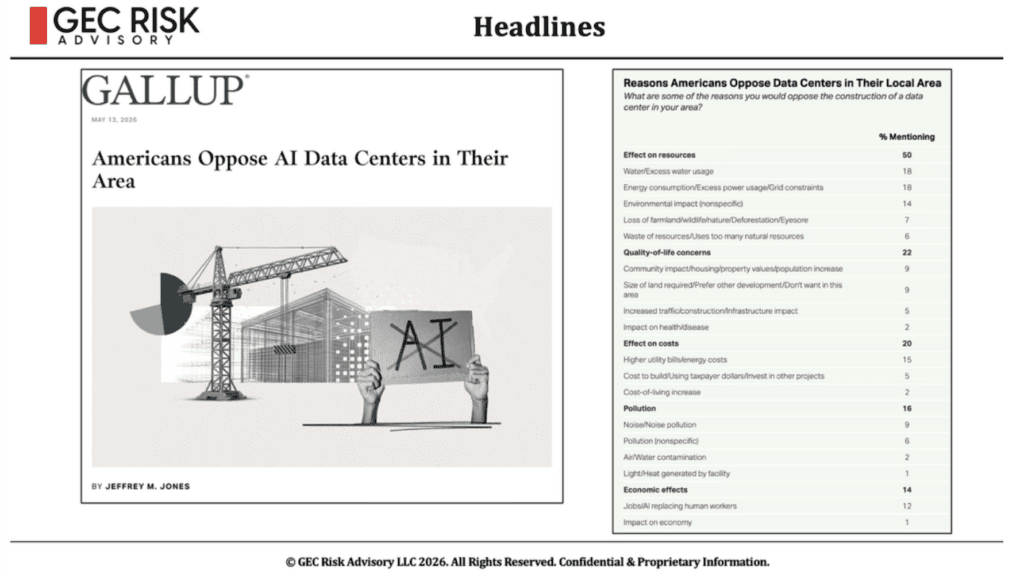
We discussed another huge issue at the intersection of tech and politics – the rise of AI data centers as a unifying issue bringing communities together regardless of political affiliation and the fact that the democrats seem – for now – to have the upper hand on this issue in terms of siding with growing anti-data center popular sentiment. See Gallup Poll below.
The group discussed the current crisis of leadership in both government and business, with participants highlighting how self-interest has replaced responsibility among political and corporate leaders. They analyzed the implications of concerns about financial disclosures and conflicts of interest among public officials, including questions raised about cryptocurrency-related investments.
The discussion also covered challenges with the Democratic Party’s leadership and messaging strategy, with participants expressing concerns about upcoming elections and the need for stronger leadership to counteract concerning power dynamics they saw playing out in both government and business. I suggested folks read my recent article for illuminem about “The Case for More Empathic Polymaths in Tech Leadership” and beyond into the political and business spheres.
As always, we concluded with a few key positive and constructive things each of us and our friends, family and colleagues can do to improve the challenging situation, including: