

Let us know what you think on the LinkedIn version of this newsletter!
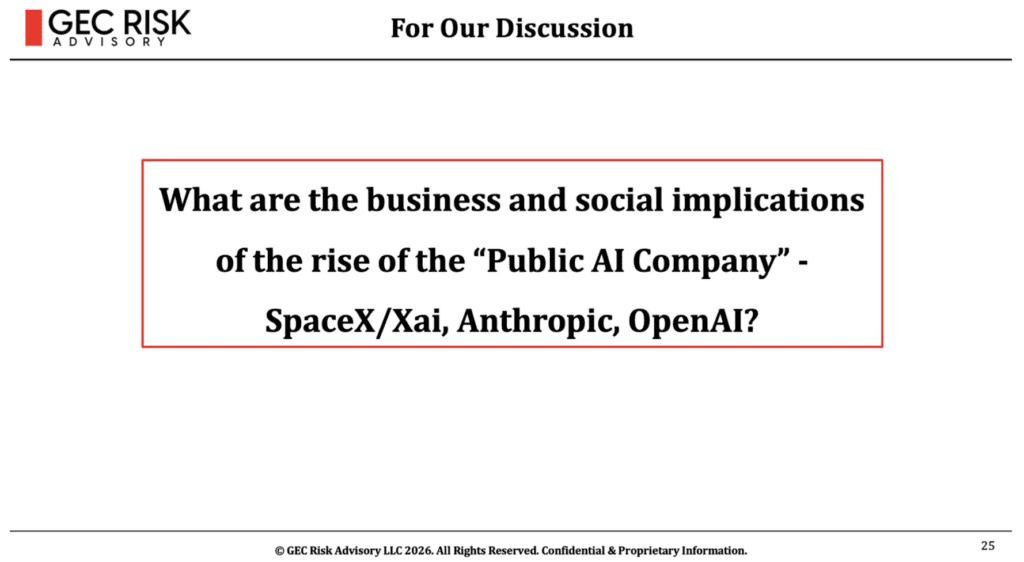
In the June 2026 live discussion of our joint Athena Alliance / GEC Risk Advisory “Ripped from the Headlines” monthly online salon, a majority (67%) of attendees chose the topic of the month: What are the business, social, and other implications of the rise of new public AI companies like SpaceX, and later this year Anthropic and OpenAI?
Below is the exact question we addressed and in this blog you will find some of the key issues we discussed and takeaways we considered from these important technological and governance developments all under Chatham House rules.
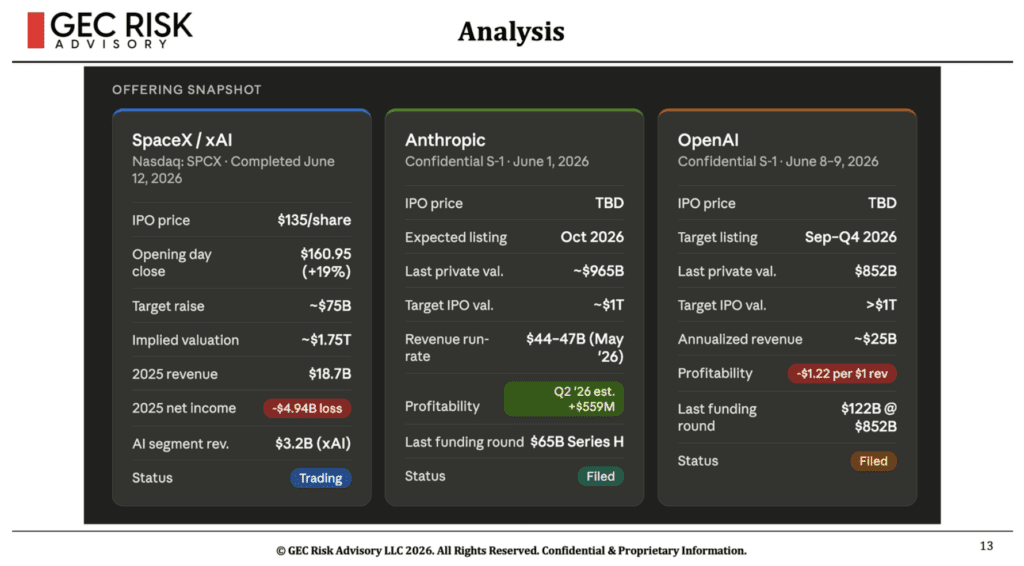
As we always do, I presented for about 20 minutes an overview of some of the recent stories and headlines on these companies and their efforts to go public from sources I find more or less reliable – The Economist, the Financial Times, the New York Times, The Wall Street Journal, BBC, NBC, Axios and Semafor. I also provided a comparison of these three companies’ financial profiles.
Participants discussed the tension between appreciating technological innovation and addressing ethical concerns about company leadership, particularly regarding Elon Musk’s public actions and statements, his past leadership of DOGE and role in restructuring and practically eliminating USAID, and the wide-ranging effects of these decisions on domestic and international programs. See the slide below showing relevant news items.

The group explored environmental and social implications of AI data centers, including water usage concerns in drought-prone regions and the need for local community oversight.
Discussion also covered the recent government shutdown of Anthropic’s Fable model and questions about uneven regulatory application across AI companies. Participants shared perspectives on investing in these companies, the importance of local regulations to address gaps in federal oversight, and emerging technologies that might address environmental concerns associated with data centers.
We had a discussion on the rise of public AI companies, focusing on SpaceX’s historic IPO and the implications for investors, businesses, and society. Participants debated the ethical considerations surrounding Elon Musk’s role in both innovative technology and public policy decisions, with some expressing concerns about governance, environmental impact, and shifts in the regulatory oversight landscape.
The group also discussed local and global responses to AI data center expansion, including community pushback and emerging technologies aimed at addressing environmental challenges.
The conversation highlighted the need for balanced innovation and responsible governance, with participants suggesting that local action and technological innovation could help mitigate some of the broader concerns raised.
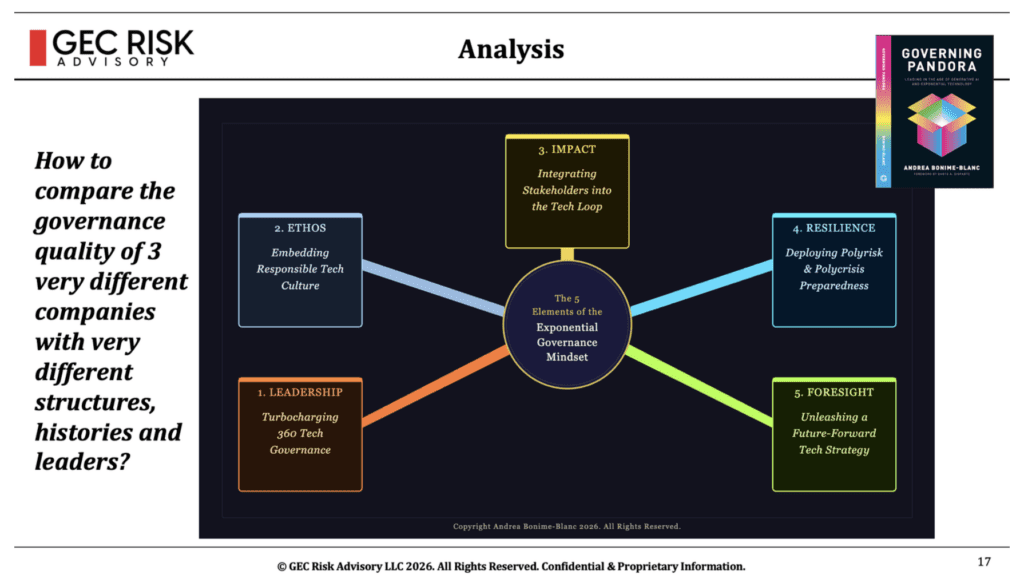
I shared the “Exponential Governance Mindset” framework from my recent book Governing Pandora as a way for decision-makers to think about and evaluate some of these AI companies – especially the new ones that are becoming public – to understand how good, bad or ugly their internal governance structures are and therefore their potential and ability to be resilient, survive and thrive after their IPO. See graphic below of this framework and see Governing Pandora book page here.
As we always try to do through these Salon conversations, we walked away with a few key takeaways that will hopefully help us navigate our uncertain times, including the following: